Continuous Positive Airway Pressure Therapy: What It Does and Why It Matters
continuous positive airway pressuretherapy what is it? It is a sleep treatment that uses steady air pressure to keep your airway open, reduce breathing pauses, and improve sleep quality for people with sleep apnea.

Continuous positive airway pressure
therapy is usually called CPAP. It uses a machine, a tube, and a mask to
deliver a steady stream of air that keeps the airway open while you sleep. This
is one of the most common treatments for obstructive sleep apnea.
People often search for how does
CPAP therapy work sleep apnea because the idea can sound technical at first. In
simple terms, the machine does not breathe for you. It simply keeps the airway
from collapsing so breathing stays stable through the night.
In our experience, new patients usually
want two things right away: a clear explanation and realistic expectations.
CPAP is not a cure, but for many people it can make a major difference in sleep
quality, daytime energy, and overall well-being.
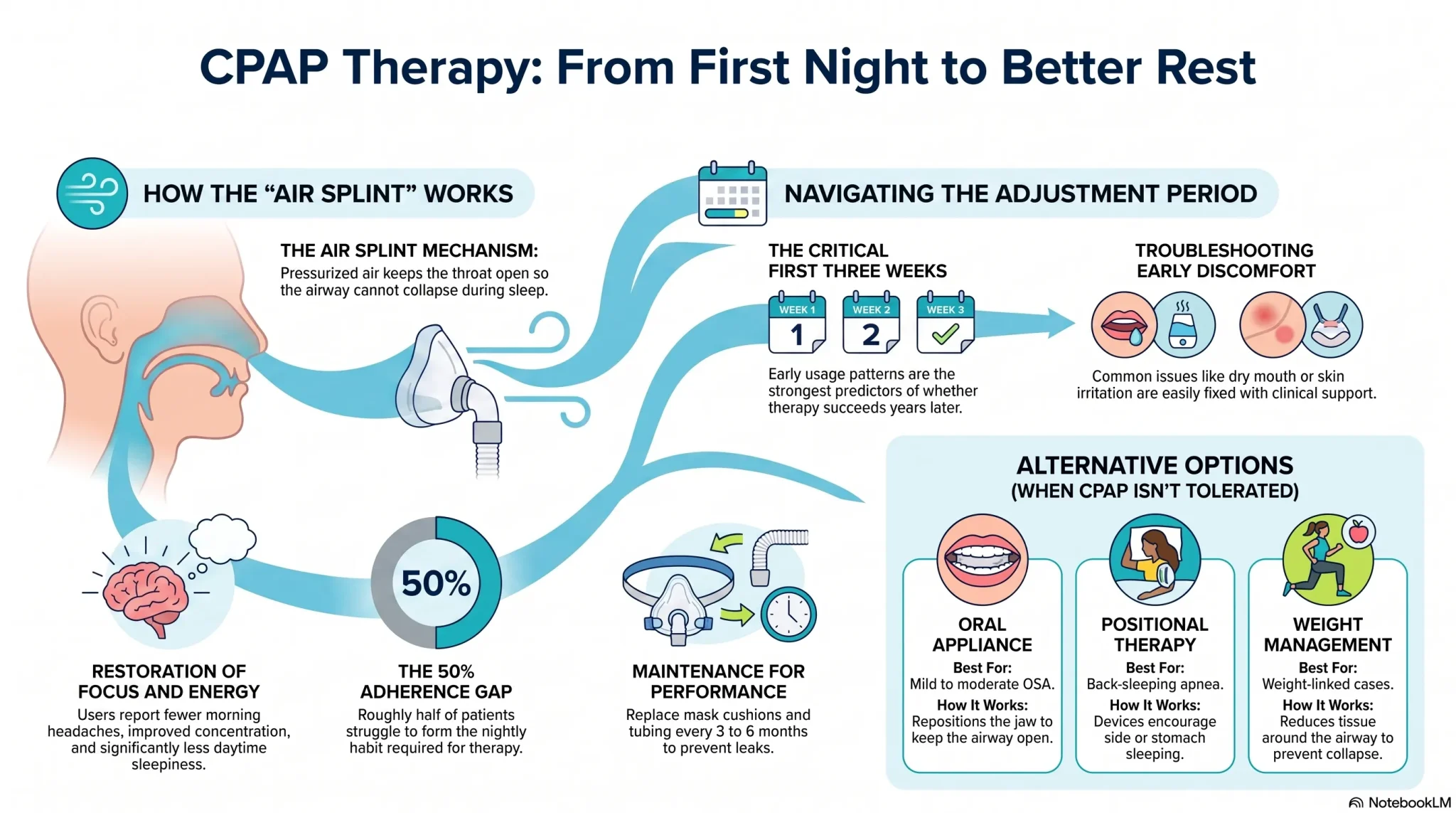
How it works
CPAP works by sending pressurized
air through the mask and into the airway. That air pressure acts like a gentle
support, helping the throat stay open instead of narrowing or closing during
sleep.
This matters because airway collapse
is what causes many people with sleep apnea to snore, gasp, or wake up feeling
unrefreshed. By keeping the airway open, CPAP can improve airflow and reduce
sleep disruption.
The machine also tracks usage data
in many cases. That helps patients and clinicians see how well treatment is
working and whether any adjustments are needed.
Benefits for patients
The main CPAP therapy benefits new
patient guide message is simple: better sleep often leads to better days. Many
people notice less daytime sleepiness, better focus, fewer morning headaches,
and more steady energy when they use CPAP regularly.
There are also safety benefits.
Since untreated sleep apnea can affect alertness and reaction time, effective
treatment may help reduce driving risks and other problems linked to fatigue.
The biggest improvements usually come
from consistent nightly use. A person who uses the machine only from time to
time may not get the same results as someone who uses it for most of the night,
every night.
Starting treatment
The starting CPAP therapy what to
expect stage usually includes reviewing the sleep study results, fitting the
mask, and adjusting to the machine at home. Many patients need a short learning
period before CPAP feels normal.
Common early issues include dry
mouth, mask discomfort, and the feeling that the airflow is unusual at first.
These problems are common for new users, and they can often be improved with
the right mask style, better fit, or pressure adjustments.
In our experience, the first few
weeks matter most. People who get clear setup guidance and follow-up support
usually adjust faster and stay more consistent with treatment.
Who it helps
CPAP is most often used for
obstructive sleep apnea, but it may also be prescribed for some other
sleep-related breathing problems. It is especially helpful when symptoms include
loud snoring, gasping, choking, or repeated breathing pauses during sleep.
People with more severe sleep apnea
often feel the strongest benefits, especially when daytime sleepiness is a
major issue. Research has shown meaningful improvements in sleepiness and
quality of life when CPAP is used consistently.
If someone has been diagnosed with
sleep apnea, CPAP is often one of the first treatments discussed because it is
widely used and well studied.
Common mistakes
A common mistake is expecting CPAP
to feel perfect on the first night. Most people need some adjustment time, and
that does not mean the treatment is not working.
Another mistake is using the machine
only sometimes and expecting full results. CPAP works best when it becomes a
regular part of the nightly routine.
People also wait too long to report
discomfort. Small issues like a poor mask seal or dry mouth are often easy to
fix once they are brought up early.
1) What is continuous positive airway pressure therapy?
Continuous positive airway pressure
therapy is a sleep treatment that uses steady air pressure to keep the airway
open. It is most often used for obstructive sleep apnea, where the throat
narrows or collapses during sleep. The goal is to reduce breathing pauses and
improve sleep quality.
2) How does CPAP therapy work for sleep apnea?
CPAP therapy works by sending
pressurized air through a mask into the airway during sleep. That airflow helps
prevent the throat from collapsing, which keeps breathing steady and reduces
snoring, gasping, and sleep interruptions. It does not force breathing; it
supports airflow.
3) What are the benefits of CPAP therapy for new patients?
CPAP therapy benefits new patients
by improving sleep quality, reducing daytime sleepiness, and helping with focus
and energy. Many people also notice fewer headaches and less snoring. The
biggest gains usually come from regular use over time, not occasional use.
4) What should I expect when starting CPAP therapy?
Starting CPAP therapy usually means
a learning period. You may need time to adjust to the mask, airflow, and
bedtime routine. Some early discomfort is normal, but mask changes, fit
adjustments, and support from the sleep clinic often make the transition much
easier.
5) Does CPAP therapy cure sleep apnea?
No, CPAP therapy does not cure sleep
apnea. It manages the condition by keeping the airway open while you sleep.
That is why it works best as a regular nightly treatment rather than a one-time
fix.
6) How long does it take to feel better on CPAP?
Some people feel better within a few
nights, while others need several weeks to adjust and notice changes. The
timeline depends on how severe the sleep apnea is, how well the mask fits, and
how consistently the machine is used each night.
7) What are the common side effects of CPAP?
Common side effects include dry
mouth, mask discomfort, skin irritation, and bloating. These issues are often
manageable with better mask fitting, humidification, or pressure adjustments.
Most patients do not need to stop treatment because of them.
8) Why is regular CPAP use so important?
Regular CPAP use is important
because the treatment only works while you are using it. If the machine is used
every night for the full sleep period, the airway stays open and the benefits
are more likely to show up in daytime energy and alertness.
Explore Our Range
If you are starting therapy, the
right CPAP machine, mask, and accessories can make adjustment easier and more
comfortable. Reliable equipment can support better use, fewer interruptions,
and a smoother treatment routine.
Resources & Further Reading
●
NHLBI: Sleep Apnea Treatment
●
NHS: Continuous Positive Airway Pressure (CPAP) Treatment
●
University Hospitals Birmingham: Trial of CPAP therapy
●
PubMed: CPAP therapy
for treating sleepiness in OSA


Comments
Post a Comment