Home Remedies for Sleep Apnea: 12 Practical Ways to Ease Symptoms
Homeremedies can help lessen sleep apnea symptoms by improving breathing, sleep position, and daily habits, but they cannot fully replace treatment for moderate or severe cases.
Sleep
apnea happens when breathing repeatedly becomes shallow or stops during sleep
because the airway narrows or collapses. Many people first notice loud snoring,
waking up gasping, dry mouth, morning headaches, or constant tiredness, then
start searching for home remedies for sleep apnea before trying a device
or prescription treatment.
That
search makes sense, especially when symptoms seem mild, happen only in certain
positions, or feel tied to congestion, weight gain, or bedtime habits. The
problem is that not every case is simple. Some people improve a lot with
lifestyle changes, while others still need medical care because their breathing
pauses are frequent enough to affect health and sleep quality.
So
the goal of this guide is not to promise a cure. It is to show which at-home
strategies may genuinely help, how to use them consistently, and when the issue
is big enough that you should not rely on self-care alone. If you are looking
for a natural sleep apnea treatment without CPAP, the best approach is
usually a combination of several small changes, not one miracle fix. And if you
are wondering can sleep apnea be cured without a machine, the honest
answer is that some mild cases can improve significantly, but many cannot be
safely managed that way.
Remedies that help
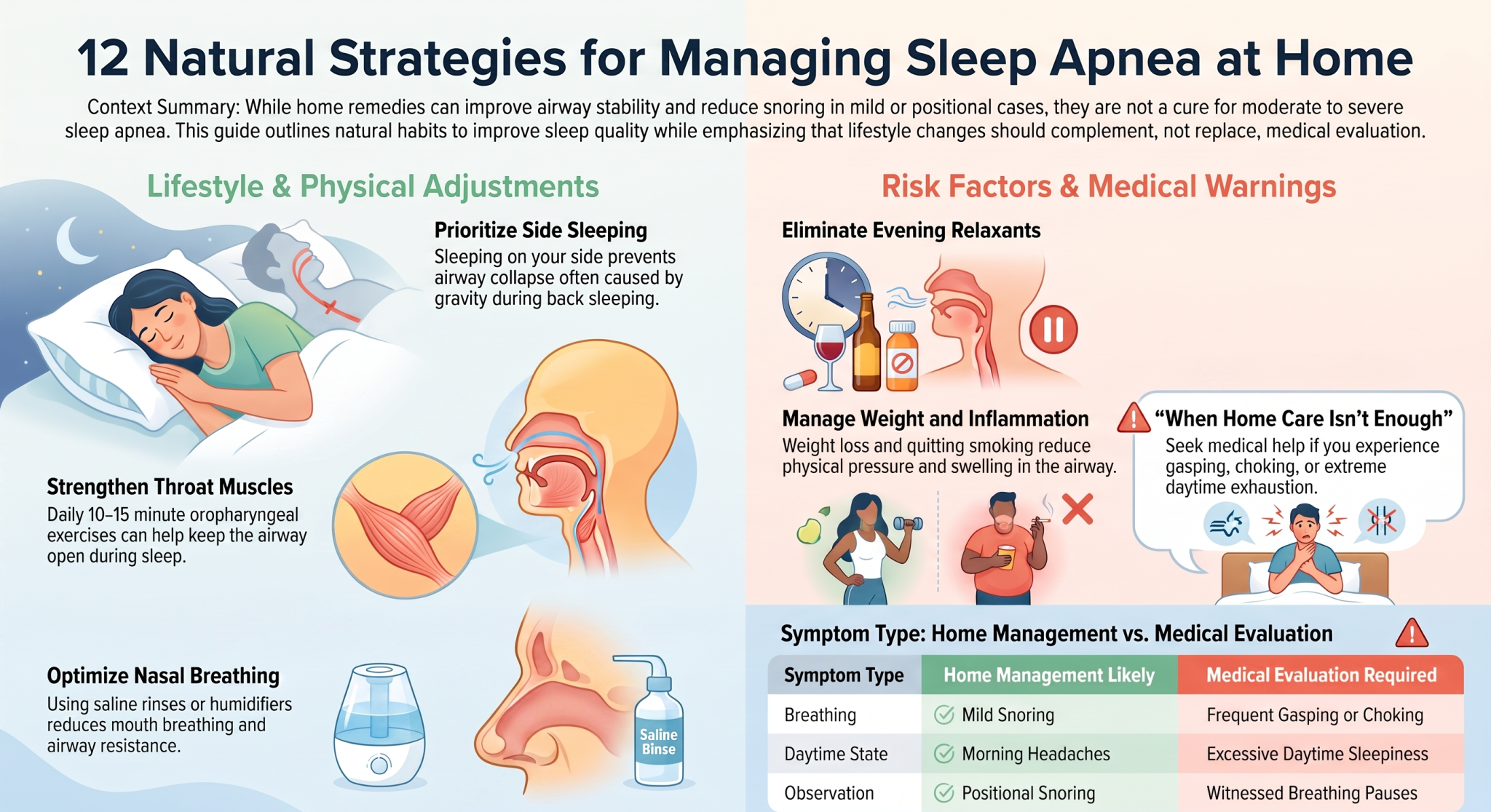
1. Sleep on your side
Sleeping
on your back often makes the tongue and soft tissues fall backward, which can
narrow the airway. Side sleeping can reduce that collapse for many people,
especially those whose symptoms are clearly worse in the back-sleeping
position. A body pillow, wedge pillow, or even a simple pillow behind your back
can make side sleeping easier to maintain through the night.
2. Keep nasal breathing clear
If
your nose is blocked, your body is more likely to switch to mouth breathing,
which can increase snoring and throat dryness. Saline rinses, allergy
management, and a bedroom humidifier may make a real difference for people with
congestion. When nasal airflow improves, the rest of the night often feels
calmer and less strained.
3. Reduce excess weight if needed
Extra
weight, especially around the neck and upper body, can crowd the airway and
make breathing during sleep more difficult. Even modest weight loss may improve
symptoms in some people, though it does not solve every case. This is one of
the most important long-term changes because it addresses a major physical
cause, not just the symptoms.
4. Avoid alcohol close to bedtime
Alcohol
relaxes throat muscles, which can make the airway more likely to collapse
during sleep. That means snoring and breathing interruptions can become worse
after evening drinking, even if the amount does not seem large. If you drink,
moving it earlier in the day or reducing it overall is often a smart first
step.
5. Stop smoking
Smoking
irritates the airway and can add inflammation, swelling, and extra mucus, all
of which make nighttime breathing harder. Quitting may not produce overnight
results, but it supports cleaner airflow and better sleep over time. People
often underestimate how much upper-airway irritation contributes to snoring and
restless sleep.
6. Do mouth and throat exercises
These
exercises are often used to strengthen the tongue, soft palate, and surrounding
muscles that help keep the airway open. They are especially useful when snoring
or mild airway collapse is part of the problem. Consistency matters more than
intensity here, because the benefit builds gradually rather than instantly.
7. Strengthen your sleep routine
A
stable sleep schedule helps the body rest more efficiently, even when sleep
quality is not perfect. Going to bed and waking up at the same time, keeping
the room cool and dark, and avoiding heavy meals late at night can reduce extra
sleep disruption. Good sleep habits will not fix airway obstruction on their
own, but they can make the nights feel less fragmented.
8. Manage reflux if it is present
Acid
reflux can irritate the throat and worsen nighttime discomfort, especially when
lying flat after a heavy meal. Avoiding late eating, lifting the head slightly,
and identifying trigger foods may reduce symptoms. For people who wake with
throat irritation or sour taste, reflux control may help make breathing feel
less disturbed.
9. Use a pillow that supports alignment
A
good pillow should keep the head, neck, and shoulders in a comfortable line
rather than bending the airway awkwardly. Some people also benefit from a
slight upper-body elevation, especially if they have reflux or nasal
congestion. Small position changes can make a bigger difference than expected
when the airway is sensitive.
10. Move your body regularly
Regular
exercise supports weight control, better breathing efficiency, and stronger
overall muscle tone. It does not have to be intense; walking, cycling, or light
strength work can all help over time. The value of exercise is that it improves
several contributing factors at once, instead of targeting only one symptom.
11. Be careful with sedatives
Some
sleep aids, calming medicines, and alcohol-like sedating effects can relax
throat muscles too much during sleep. That may worsen breathing pauses in
people who already have airway narrowing. Never stop a prescribed medicine
without medical guidance, but do ask whether it could be making your symptoms
worse.
12. Track what happens at night
Keep
notes on snoring, gasping, morning headaches, dry mouth, and daytime
sleepiness, along with what you did differently that day. Tracking turns
guesswork into patterns, which makes it easier to see whether a change is truly
helping. It also gives a clinician better information if testing or treatment
becomes necessary.
What helps most
The
strongest results usually come from combining several habits instead of testing
just one. Side sleeping, nasal care, weight management, and throat exercises
often work better together than alone. In many real-life cases, that layered
approach is what makes the biggest difference.
That
said, if symptoms are loud, frequent, or linked to choking, extreme fatigue, or
high blood pressure, self-care is not enough. In that situation, a proper
evaluation matters because breathing pauses can affect more than just sleep.
The aim is to improve symptoms safely, not to keep guessing while the problem
continues.
Common mistakes
One
common mistake is assuming snoring is always harmless. Some people snore loudly
for years without realizing they also stop breathing at night. Another mistake
is trying a tip for only a few days and then giving up before any real pattern
has had time to show up.
People
also expect a single trick to solve everything. In reality, home remedies
for sleep apnea work best when they fit the cause of the problem. Side
sleeping may help one person more than another, while weight loss, congestion
care, or reflux control may matter more in a different case.
FAQ
1. Can sleep apnea be cured without a machine?
Sometimes
mild sleep apnea can improve enough through lifestyle changes that a machine is
not needed. Weight management, side sleeping, better nasal breathing, and
throat exercises may reduce symptoms in selected cases. However, moderate or
severe sleep apnea often still requires medical treatment because breathing
pauses can remain harmful even when symptoms seem less obvious.
2. What are the most effective home remedies for sleep
apnea?
The
most effective remedies are usually side sleeping, reducing alcohol, improving
nasal airflow, managing weight, and doing mouth and throat exercises
consistently. These steps work because they address the main drivers of airway
narrowing and sleep disruption. They are most useful when used together, not as
isolated one-time fixes.
3. Do mouth and throat exercises actually help?
Yes,
they can help some people, especially when snoring or mild airway collapse is
part of the problem. These exercises strengthen the muscles that support the
tongue and soft palate, which can help the airway stay more open. The key is
regular practice over time, because the benefit tends to build slowly rather
than quickly.
4. How to reduce sleep apnea naturally at home?
Start
with side sleeping, alcohol reduction, nasal care, and weight control if it
applies to you. Add regular exercise and a more consistent sleep schedule so
your body is under less strain at night. These steps can lower symptom
severity, but they should not replace a sleep evaluation when breathing pauses
are frequent or severe.
5. Is snoring always a sign of sleep apnea?
No,
snoring is not always sleep apnea, but persistent loud snoring can be a warning
sign. If snoring is paired with gasping, choking, morning headaches, or strong
daytime sleepiness, sleep apnea becomes more likely. The safest approach is to
look at the full symptom pattern instead of assuming snoring is harmless.
6. Which sleep position is best for sleep apnea?
Side
sleeping is usually the best position because it helps keep the airway more
open than lying flat on the back. Many people notice fewer breathing
interruptions in this position, especially if they use a body pillow or
supportive setup. Position changes are simple, but for some people they make a
meaningful difference.
7. When should someone get medical help?
Medical
help is important if you wake up gasping, feel exhausted during the day, are
told that you stop breathing during sleep, or have high blood pressure along
with sleep symptoms. Those signs suggest the condition may be more serious than
mild snoring. A sleep evaluation can confirm what is happening and help prevent
future complications.
8. Can lifestyle changes replace CPAP?
Lifestyle
changes can improve symptoms, but they do not always replace CPAP. Some people
with mild sleep apnea may manage well with non-device strategies, while others
need a machine because the airway collapse is still too significant. The right
answer depends on severity, cause, and how your body responds over time.
If
you are trying to improve your sleep safely, start with side sleeping, nasal
care, exercise, and symptom tracking for two weeks. If the breathing pauses,
fatigue, or gasping continue, get evaluated before assuming the problem is
mild.
Get Home Sleep Test From cpapRX
Resources & Further Reading
● National Heart, Lung, and Blood Institute for sleep apnea basics.
● Mayo Clinic for symptoms and treatment
overviews.
● American Academy of Sleep Medicine for sleep disorder guidance.
● NIH PubMed for research on mouth and throat
exercises.
● FDA for safety information on
sleep-related devices.


Comments
Post a Comment