5 Sleep Apnea Myths That Refuse to Die (And the Reality Behind Each One)
Sleep apnea might be the most misunderstood common condition in America. Millions of people dismiss it as "just snoring," assume it only affects older overweight men, or believe treatment means being chained to a noisy machine forever — and every one of those beliefs is wrong. Before we bust the biggest myths, it's worth grounding yourself in the actual Sleep Apnea Facts — nine research-backed truths that reshape how you think about this condition. Then come back here, because the myths below are the reason most of the 30+ million Americans with sleep apnea still have no idea they have it.
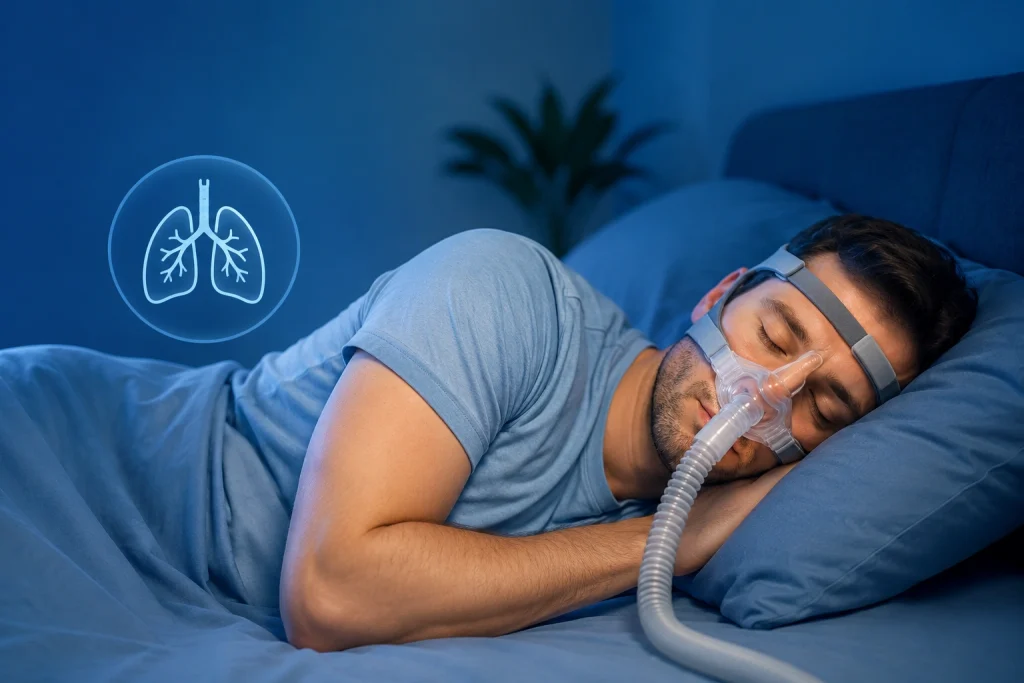
Myth #1: "Snoring Is Harmless — Everyone Snores"
The reality: Occasional light snoring can be harmless. But loud, chronic snoring punctuated by silences, gasps, or choking sounds is the signature soundtrack of obstructive sleep apnea — your airway literally collapsing and reopening dozens of times per hour. The dangerous part isn't the noise; it's the silence between the snores, when breathing stops entirely. If a bed partner has ever said "you stopped breathing," that's not a quirk. That's a symptom demanding a sleep test.
Myth #2: "Only Overweight Older Men Get Sleep Apnea"
The reality: Weight is one risk factor among many — not a requirement. Thin people get sleep apnea because of jaw structure, large tonsils, nasal obstruction, or a naturally narrow airway. Women get it too, and their numbers surge after menopause, though they're chronically underdiagnosed because their symptoms often show up as fatigue, insomnia, or mood changes rather than dramatic snoring. Even children develop sleep apnea. Assuming you're "not the type" is exactly how millions of cases stay hidden.
Myth #3: "It's Just Tiredness — Nothing Serious"
The reality: Untreated sleep apnea is linked to high blood pressure, heart disease, stroke, type 2 diabetes, and cognitive decline. Every breathing pause drops your blood oxygen and jolts your cardiovascular system with a stress response — hundreds of times a night, every night, for years. The daytime exhaustion is the visible tip; the silent damage underneath is what makes sleep apnea a medical condition rather than an inconvenience. Drowsy driving alone makes untreated apnea genuinely dangerous — crash risk multiplies when your brain is running on fragmented sleep.
Myth #4: "Getting Diagnosed Means Weeks in a Sleep Lab"
The reality: This was true fifteen years ago. Today, an FDA-approved home sleep test — a small device worn on your wrist and finger for one night in your own bed — captures the data physicians need to diagnose obstructive sleep apnea. A board-certified sleep doctor reviews the results, and most people have their answer within a week, without ever visiting a lab or sitting in a waiting room. The single biggest barrier to diagnosis — inconvenience — has effectively disappeared. What remains is simply the decision to test.
Myth #5: "CPAP Machines Are Loud, Bulky, and Unbearable"
The reality: Modern CPAP machines run at whisper volume — around 26 decibels, quieter than most bedroom fans. Masks have evolved from the full-face contraptions of old into minimal nasal pillow designs that barely touch your face. Auto-adjusting machines change pressure breath by breath, and built-in humidifiers eliminated the dry-mouth misery of early devices. Most people who "hated CPAP" tried it a decade ago or were fitted with the wrong mask. Comfort technology has quietly transformed while the myth stayed frozen in time.
Why These Myths Are Genuinely Costly
Roughly 80% of moderate-to-severe sleep apnea cases remain undiagnosed — and myths are a big part of why. People don't test for a condition they believe doesn't apply to them, isn't serious, or requires an ordeal to diagnose and treat. Meanwhile, the average person waits years between first symptoms and diagnosis, absorbing cardiovascular strain and cognitive fog the entire time. Every myth debunked is, quite literally, a health risk shortened.
The Takeaway
If you snore loudly, wake unrefreshed, fight afternoon exhaustion, or have ever been told you stop breathing at night — don't let a myth make the decision for you. Testing is now a one-night, at-home process, and treatment is quieter, smaller, and more comfortable than its reputation. The facts have moved on. Make sure your beliefs move with them.
Disclaimer: This article is for informational purposes only and is not medical advice. Consult a qualified healthcare provider for diagnosis and treatment.


Comments
Post a Comment