How Long Do CPAP Machines Last? When It's Time to Replace Yours
What
really drives how long do cpap machines last?
Age
is only part of the story. How many hours you run the device, where you keep
it, and how you clean it all shape its useful life. A unit used every night in
a dusty bedroom will wear faster than one kept clean, cool, and on a stable
shelf.
Inside
the machine, motors spin, sensors measure airflow, and humidifiers heat water.
Over thousands of nights, bearings loosen, seals stiffen, and filters collect
debris. Even if the screen lights up, therapy quality can slowly slip without
obvious alarms.
That's
why asking "how long do cpap machines last?" isn't just about
counting years. It's about watching your sleep quality, listening to the
device, and noticing trends in your data over time.
Device types and realistic service life
Standard bedside CPAP and APAP
Most
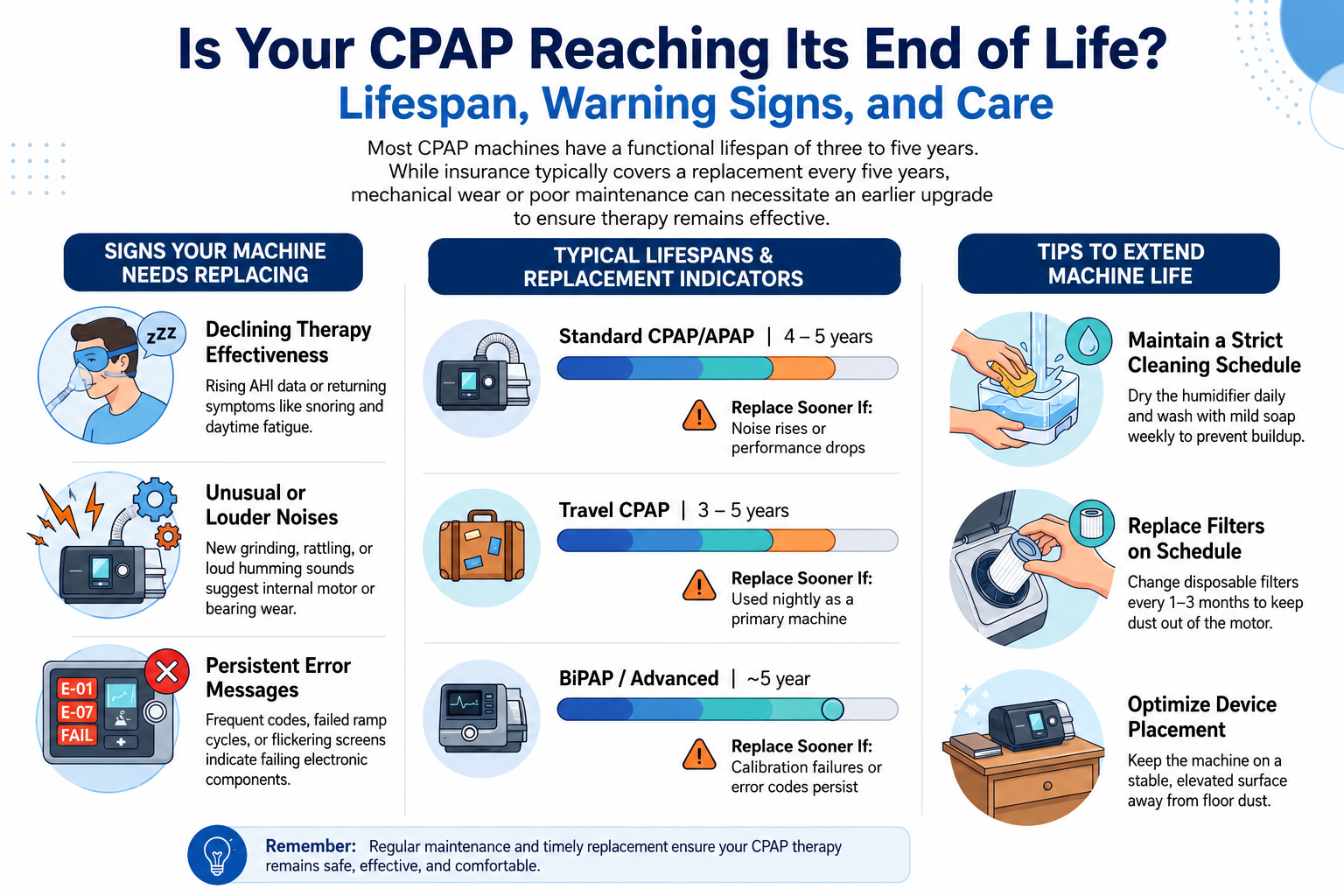
home CPAP or auto‑CPAP (APAP) units deliver steady therapy for roughly four to
five years. Many users reach year six with no major issues if they swap filters
on schedule, rinse the humidifier chamber, and keep smoke or pet hair away from
the air intake.
Insurers
often base replacement policies on this four‑to‑five‑year window. If your
device sits in that range, passes self‑checks, and your symptoms stay
controlled, you may not need to upgrade unless noise becomes disruptive or
performance drops.
Compact travel CPAPs
Travel
machines like the ResMed AirMini or Z2 Auto prioritize light weight over
decades of continuous use. Their typical service life is three to five years,
depending on how often they act as your primary machine.cpap+1
If
you depend on a travel CPAP every night, expect earlier wear on the motor,
battery, and connectors. Plan to evaluate replacement around year three or four
if you notice pressure swings, louder operation, or more frequent error alerts.
BiPAP and other advanced PAP devices
BiPAP
(bilevel) and other advanced PAP units often follow similar five‑year
replacement guidelines from insurers, though some models are rated for slightly
longer under ideal conditions.
Because
these devices run more complex algorithms and sometimes include remote
monitoring, recurring calibration errors or board faults should trigger an
earlier review, even if the unit is under five years old.
Red flags that your unit is wearing out
Therapy no longer feels the same
If
you used to sleep well but now wake tired, notice more snoring, or feel short
of breath in the morning, your machine may not be delivering steady pressure.
Internal wear, sensor drift, or seal degradation can cause this even when the
display looks normal.
Check
your usage hours and AHI data in the app or on the SD card. A rising AHI with
good mask fit and consistent use often points to machine performance rather
than user error.
Noise changes: humming, grinding, or rattling
A
sudden increase in noise—especially grinding, rattling, or a harsher hum during
inhalation—is a strong warning sign. The motor and fan are precision parts;
when bearings wear or housings crack, sound levels rise and pressure can become
less stable.
If
cleaning filters and clearing obstructions doesn't quiet the unit, internal
wear is likely. Don't ignore persistent unusual sounds just because the machine
still turns on.
Repeated error codes or screen problems
Modern
CPAPs run internal diagnostics and show error messages when sensors, heaters,
or circuit boards fail. Frequent errors, failed ramp cycles, or
blank/flickering screens suggest electronic issues that usually worsen with
time.
When
basic steps like power cycling, checking connections, and updating firmware
don't stop recurring errors, the device is likely approaching cpap machine end
of life from a functional perspective. Continuing to rely on it risks
inconsistent therapy and interrupted sleep.
Physical damage and non‑mask air leaks
Cracks
in the casing, loose air outlets, damaged power jacks, or persistent air leaks
that aren't caused by the mask or tubing can all indicate structural wear.
After years of nightly use, plastic can become brittle, seals can harden, and
connectors can loosen.
If
you've ruled out mask fit and tubing problems but still notice leaks or
pressure drops at the machine itself, internal pathways or seals are likely
failing. This kind of wear often speeds up once the cpap machine warranty
expired, leaving you responsible for repair bills.
Warranty, insurance, and smart timing for replacement
Manufacturer warranties and what happens after
Most
CPAP makers offer a one‑ to two‑year warranty for defects in materials and
workmanship, with shorter coverage for accessories like masks and tubing. Once
your cpap machine warranty expired, any repairs or replacements come out of
pocket unless you have a separate protection plan.
If
major issues appear in year three or four, compare repair quotes with the cost
of a new unit. Often, buying a newer model with updated features and a fresh
warranty is more cost‑effective than repeatedly fixing an aging device.
Insurance and Medicare replacement cycles
Private
insurers, Medicare, and Medicaid typically cover a new CPAP machine once every
five years, assuming ongoing use and medical need. Some plans may allow earlier
replacement if the device is lost, badly damaged, or no longer suits your
condition.
If
your machine is nearing the five‑year mark and showing any performance decline,
talk with your provider and DME supplier to start the replacement process.
Aligning your upgrade with your insurance cycle helps avoid coverage gaps and
extra out‑of‑pocket costs.
Repair versus replace: a simple rule of thumb
Under
three years and still under warranty? Repairs or replacements through the
manufacturer are usually straightforward. Beyond that, ask:
● How does the repair cost compare to
a new machine?
● Are parts still available for your
model?
● Would newer features (quieter motor,
better humidification, smarter algorithms) noticeably improve your sleep?
If
repair costs reach 40–50% of a new unit's price and your machine is already
four or more years old, replacement is often the wiser long‑term choice.
Simple habits that stretch your machine's life
Daily and weekly cleaning habits
● Wipe the outside with a soft,
slightly damp cloth; avoid harsh cleaners or submerging the unit.
● Empty and air‑dry the humidifier
chamber each morning; wash it with mild soap and water a few times per week.
● Change or clean filters on the
schedule your manufacturer recommends (often every 1–3 months for disposable
filters, every 6 months for reusable ones).
Clean
equipment reduces dust inside the motor and sensors, helping maintain steady
performance and lower noise over time.
Placement and environment
Keep
your CPAP on a stable, raised surface away from floor dust, pet hair, and
direct sun. Don't smoke near the device; residue can clog filters and internal
parts faster.
Make
sure air can flow freely around the intake. Tucking the machine into a closed
nightstand without ventilation can cause overheating, which speeds up
electronic wear and shortens the overall cpap machine lifespan.
Power protection and travel tips
Use
a surge protector to shield against voltage spikes, especially in areas with
unstable power. When traveling, store your device in a padded case and avoid
extreme heat or cold in cars or luggage.
Frequent
travelers should consider a backup power option and regularly inspect
connectors and tubing for wear caused by repeated packing and unpacking.
Avoiding unnecessary upgrades while staying safe
When "good enough" really is good enough
If
your machine is under four years old, passes self‑checks, delivers steady
pressure, and your symptoms stay controlled, there's usually no urgent need to
upgrade just for new features. Focus on replacing worn accessories (masks,
tubing, filters) and keeping up with maintenance.
But
if you're dealing with recurring noise, errors, or returning symptoms despite
good care, the hidden costs of poor therapy often outweigh the price of a new
device.
Timing upgrades with your coverage
Plan
major upgrades around your insurance replacement window (commonly five years)
to keep out‑of‑pocket costs low. If your current machine is failing just before
that window opens, discuss temporary solutions or early replacement criteria
with your provider and DME.
When
paying cash, compare total cost of ownership: newer models may cost more
upfront but can offer better energy efficiency, longer warranties, and fewer
repair needs over time.
Explore Our Range
If
your current device is showing signs of wear or your warranty and insurance
timelines line up for an upgrade, cpapRX carries a curated selection of
top‑rated CPAP machines, masks, and accessories.
● ResMed AirSense 11 AutoSet – Latest auto‑adjusting algorithm
with enhanced comfort features and quiet operation.
● ResMed AirMini – Compact travel CPAP with HumidX
technology, ideal for frequent travelers.
● Resvent iBreeze APAP – Value‑focused auto‑CPAP with
solid performance and a user‑friendly interface.
Browse
our full range of CPAP machines, setup packs, and replacement supplies to find
the right fit for your therapy and budget.
FAQs
How long do CPAP machines last on average?
Most
CPAP machines last about three to five years with regular nightly use before
performance starts to drop. Standard home units often reach four to five years,
while travel CPAPs may trend toward the shorter end of that range. Lifespan
varies by brand, model, usage patterns, and how well the device is maintained
over time.
When should I replace my CPAP machine?
You
should replace your CPAP machine when it shows declining therapy effectiveness,
unusual or louder noises, frequent error messages, or physical wear that
affects performance. Insurance and manufacturer guidelines commonly suggest
replacement around the five‑year mark, especially if symptoms return or the
device becomes unreliable.
What are the signs cpap machine needs replacing?
Key
signs include returning snoring or daytime fatigue, grinding or rattling noises
during operation, persistent error codes, and visible damage like cracked
housing or loose connectors. If cleaning and basic troubleshooting don't
resolve these issues, the machine is likely nearing the end of its useful life
and should be evaluated for replacement.
Is it safe to use a CPAP machine after the warranty expires?
It
can be safe to use a CPAP after the warranty expires if the device still
delivers stable pressure, passes self‑checks, and shows no warning signs.
However, once the cpap machine warranty expired, you're responsible for repair
costs, and older units are more prone to sudden failures that can disrupt
therapy and sleep quality.
How often does insurance cover a new CPAP machine?
Most
private insurers, Medicare, and Medicaid cover a new CPAP machine once every
five years, assuming continuous use and medical necessity. Some plans may allow
earlier replacement if the device is lost, irreparably damaged, or no longer
meets your clinical needs due to a change in your condition.
Can a CPAP machine last longer than five years?
Yes,
some CPAP machines can last longer than five years with excellent maintenance
and favorable operating conditions, occasionally reaching six or seven years.
However, performance may gradually decline, and many insurers won't fund
repairs or replacements beyond the standard five‑year cycle without specific
justification.
What happens if I keep using an old CPAP machine?
Continuing
to use an old, failing CPAP can lead to inconsistent pressure delivery,
increased apnea events, and returning symptoms like snoring and daytime
fatigue. Older devices may also become noisier, develop electronic faults, or
fail unexpectedly, disrupting your sleep therapy and potentially affecting your
overall health.
How can I tell if my CPAP is failing versus just needing new
supplies?
If
replacing masks, tubing, and filters doesn't improve pressure stability, noise
levels, or symptom control, the issue likely lies with the machine itself.
Check usage data and error logs; persistent problems despite fresh supplies and
proper maintenance indicate the device is failing and should be assessed for
repair or replacement.
Resources & Further Reading
● Sleep Foundation – "How Long
Does a CPAP Machine Last?" (lifespan overview and replacement signs) sleepfoundation
● ResMed – CPAP device replacement
guidelines and insurance criteria for upgrades resmed
● The CPAP Shop – Guidance on
replacing CPAP supplies and recognizing machine failure signs
● CPAP.com – Detailed article on when
to buy a new CPAP machine and lifespan by device type cpap
● Sleep Doctor – Summary of typical
CPAP lifespans, warranty norms, and insurance coverage patterns
For
more on cpapRX's product range and services, explore our CPAP machines page and
resources section on the site.


Comments
Post a Comment