Just Diagnosed With Sleep Apnea? Here's How to Pick Your First CPAP Machine
The diagnosis lands, and it's oddly anticlimactic. A doctor says “obstructive sleep apnea,” hands you a prescription, and suddenly you're expected to become a shopper for a category of product you'd never thought about a week ago.
If that's where you are right now, take a breath. Choosing your first CPAP machine is far less complicated than the internet makes it feel. Here's the calm, step-by-step version — the one I wish more newly diagnosed people got instead of a wall of spec sheets.
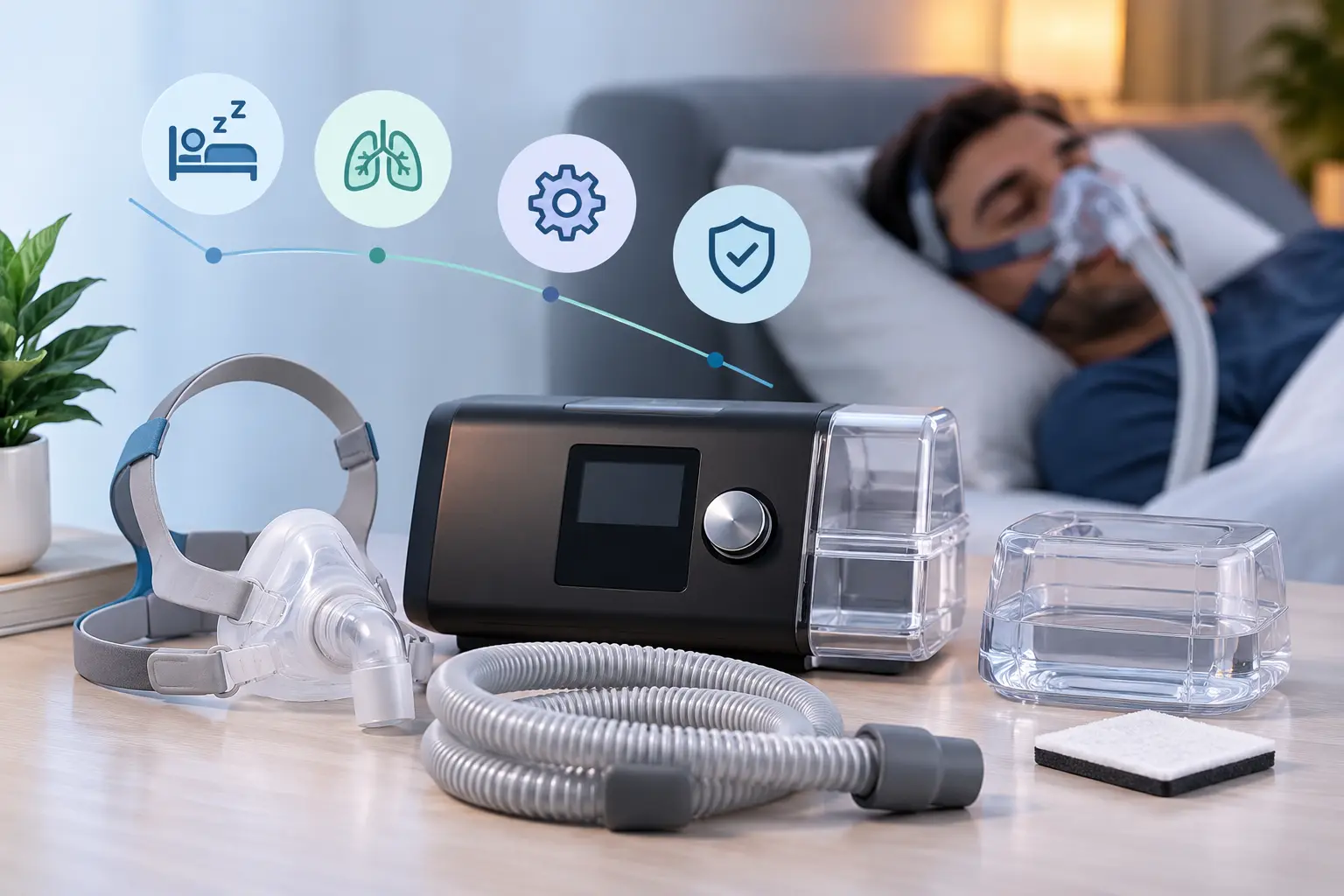
First, understand what you're actually buying
A CPAP machine has one job: keep your airway open while you sleep by delivering a gentle, steady stream of pressurized air through a mask. That's the whole mechanism. When the airway stays open, the breathing pauses and drops in oxygen that come with untreated sleep apnea are reduced — and that's why treating it is worth getting right.
You're not buying a gadget. You're buying a full setup: the machine, a humidifier, tubing, and a mask. The mask is the part people underestimate the most, so keep it in mind — a great machine with the wrong mask is a bad night's sleep.
Step 1: Start with your prescription, not the reviews
This is the mistake nearly everyone makes. They open a comparison video before they've looked at their own script.
Your prescription tells you the two things that matter most: your pressure setting and the machine type you're cleared for. In the US, a CPAP machine is a prescription device, so you can't skip this step anyway — and that's a good thing. It means your first big decision is already narrowed for you.
Step 2: Learn the three letters — CPAP, APAP, BiPAP
You'll see these acronyms everywhere. Here's the plain version:
● CPAP blows one fixed pressure all night.
● APAP adjusts the pressure automatically as your breathing changes, which many first-timers find more forgiving.
● BiPAP uses two pressures — one for inhaling, a lower one for exhaling — and is usually reserved for specific clinical needs your provider flags.
For most people newly starting out, the choice is CPAP or APAP, and your prescription points the way. You don't need to memorize the engineering.
Step 3: Pick the comfort features that keep you consistent
Once type is settled, comfort is everything — because the machine only helps on the nights you wear it. The features worth caring about:
● A heated humidifier, so the air isn't dry and harsh.
● A ramp setting, which starts the pressure low and builds up so you can fall asleep.
● Exhale pressure relief, so breathing out doesn't feel like pushing against the air.
● A quiet motor — modern machines are about as loud as a whisper.
● A companion app, so you can see your data and, in many cases, meet the usage records insurers ask for.
Notice what's not on that list: brand loyalty and premium price tags. Spend on comfort, not on a logo.
Step 4: Plan for the first two weeks
Here's the part almost no one warns you about. The first week or two can feel strange — dry mouth, a mask that leaves marks, the odd sensation of falling asleep with air blowing. This is normal, and it's fixable.
Dry mouth usually means turning up the humidifier. Mask marks usually mean the wrong size or style — a nasal pillow instead of a full face mask can be a revelation. Trouble falling asleep? That's what the ramp feature is for.
The people who thrive on therapy aren't the ones who had a perfect first night. They're the ones who treated the adjustment period as a fitting process, tweaked a few settings, and stuck with it.
Step 5: Don't do it alone
You don't have to reverse-engineer your prescription from a spec sheet. The fastest path from “just diagnosed” to “sleeping well” is a short conversation with someone who fits people to machines every day.
At cpapRX, a sleep coach walks you through diagnosis, prescription, and the setup that matches how you actually sleep — no pressure, no upsell. Care is overseen by Dr. Danny Yaish, a board-certified sleep medicine specialist. You can start at cpaprx.com/simplify-your-sleep or call 833-216-2727.
The one thing to remember
Untreated sleep apnea is associated with real fatigue and long-term health risks, so the goal isn't finding the “perfect” device — it's finding a comfortable setup you'll use every single night. Get the fit right, give yourself two weeks, and the rest takes care of itself.
You've got this. It's one good decision, not a hundred.
This article is for educational purposes only and is not medical advice. CPAP machines require a prescription. Consult a licensed provider or sleep specialist before making treatment decisions.


Comments
Post a Comment