The Science Behind Why CPAP Side Effects Happen
CPAP therapy works by delivering a continuous stream of pressurized air to keep the airway open during sleep. It's a remarkably effective treatment for obstructive sleep apnea, but the mechanism itself explains why so many new users experience uncomfortable side effects in the first few weeks.
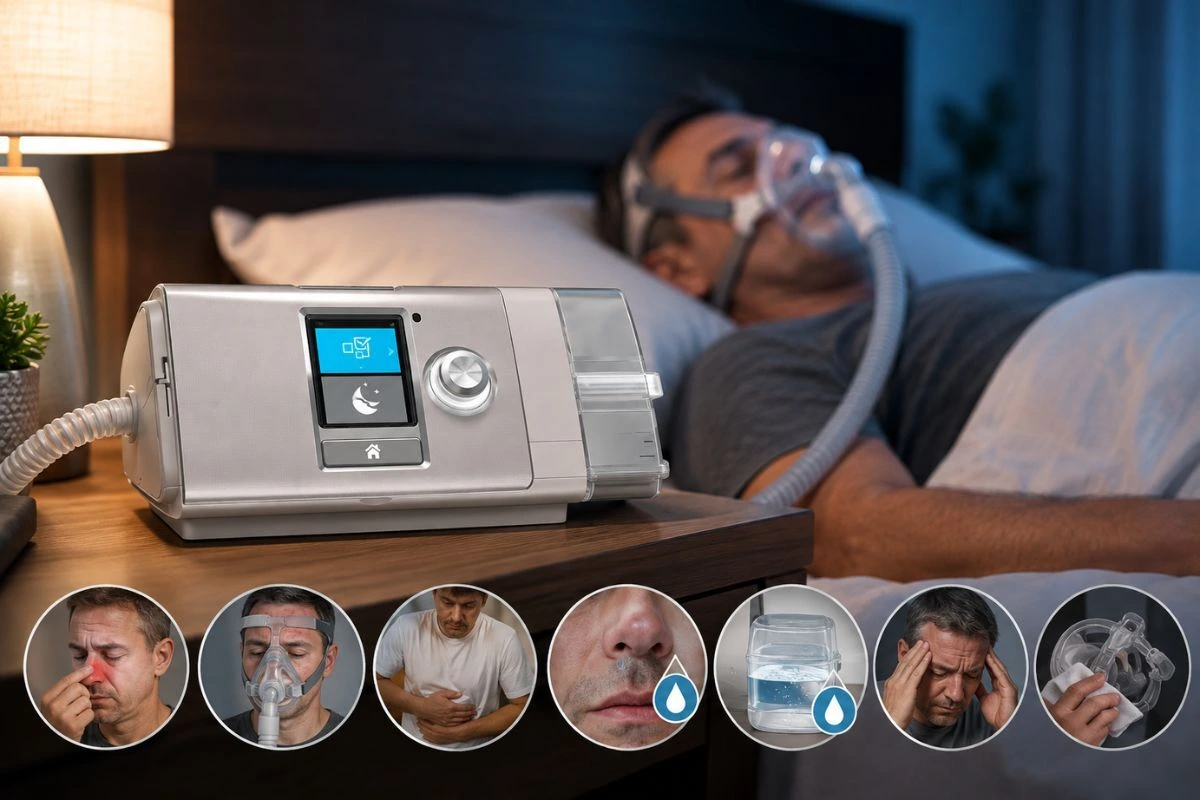
Most side effects trace back to one of three mechanical factors: insufficient humidity, an imperfect mask seal, or pressure that feels stronger than the body is used to. Understanding which of these three is at play makes troubleshooting dramatically more efficient than simply trying random fixes, and many of these factors compound each other rather than existing in isolation.
Dry mouth and nasal irritation occur because pressurized air moving continuously through the nose and mouth bypasses the body's natural humidification process. This is compounded for mouth breathers, since air moving directly through the mouth skips nasal humidification almost entirely, making the dryness issue significantly worse than it would be for someone who breathes exclusively through the nose during sleep. Increasing the humidifier setting directly addresses this by adding moisture back into the airflow before it reaches sensitive tissue.
Mask leaks stem from an imperfect seal between the cushion and the face, often due to incorrect sizing rather than a defective mask. Even a small gap allows air to escape audibly and can direct airflow toward the eyes or across the face, disrupting sleep for both the user and any bed partner. Sleep position matters here too — side sleepers in particular can have a pillow gradually push the mask off-center over the course of the night, undermining a seal that was perfectly adequate at bedtime.
Aerophagia, or air swallowing, has a specific physiological explanation: the esophageal sphincter that normally prevents air from entering the stomach can be overridden when CPAP pressure exceeds its natural resistance. Rather than air moving entirely into the lungs, some is forced into the digestive tract, producing the bloated, gassy sensation many new users report upon waking. This isn't a malfunction of the equipment — it's a predictable outcome of pressure interacting with a specific anatomical structure, which is why the typical fix involves adjusting pressure settings rather than replacing equipment.
The ramp feature — which starts therapy at a lower pressure and gradually increases it once the user has fallen asleep — directly addresses the sensation of pressure feeling "too strong" at bedtime, one of the most common reasons new users report difficulty falling asleep with the mask on. By the time full prescribed pressure is reached, the user is generally already asleep and far less likely to consciously register the transition.
Beyond mechanical fixes, behavioral adaptation plays a role as well. Wearing the mask for short periods while awake — reading, watching television — allows the nervous system to process the sensory input of the mask without the added stress of simultaneously trying to fall asleep, which for many users measurably shortens the overall adjustment period.
For a complete breakdown mapping each symptom to its underlying cause, along with specific fixes for each, see this guide to CPAP machine side effects, which also outlines the specific red-flag symptoms — including chest pain, severe air swallowing, and frequent nosebleeds — that warrant contacting a healthcare provider rather than attempting self-adjustment.


Comments
Post a Comment