Which CPAP Machine Should You Buy After the Philips Recall?
If you're shopping for a new CPAP machine in 2026, you've probably noticed that Philips DreamStation units come up less often in recommendations than they used to. That's directly tied to the Philips recall, which affected the DreamStation line and shifted how clinicians and buyers view the brand.
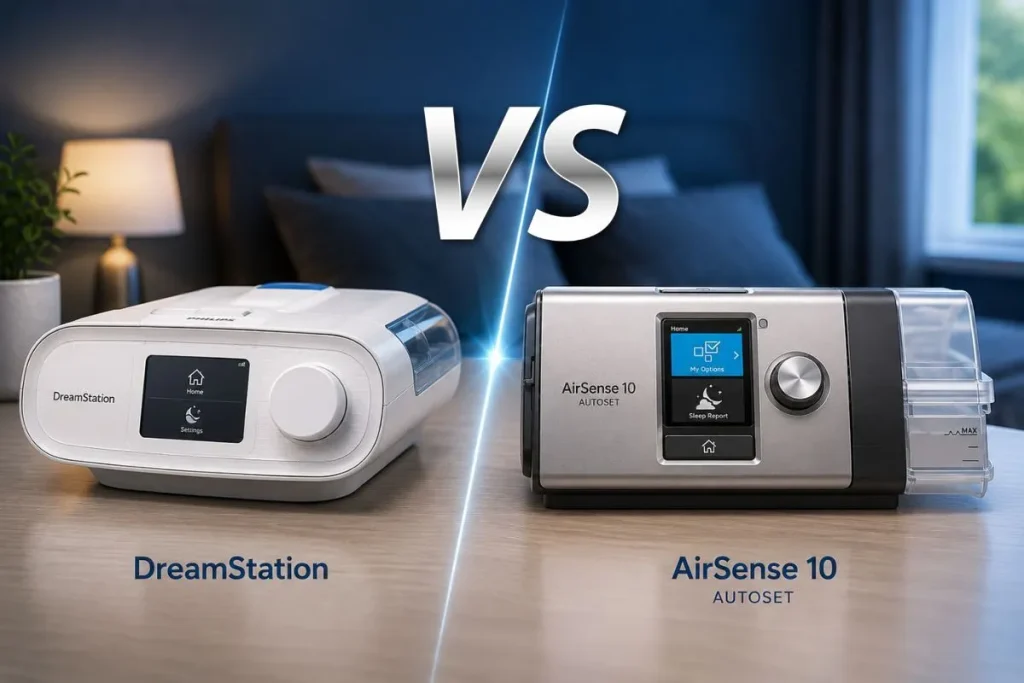
The ResMed AirSense 10 didn't have that issue, which is a big part of why it's become the more commonly recommended machine for new patients today. It's not that the DreamStation stopped working for people who already own one — plenty of existing users tolerate it fine. The concern is specifically about starting fresh with a device from a recalled product line when a well-supported alternative exists.
Beyond the recall itself, the AirSense 10 also has a built-in humidifier as standard, while some DreamStation configurations treat humidification as optional or a separate add-on. For anyone dealing with dry mouth or nasal irritation during therapy, that's a meaningful practical difference, not just a brand preference.
If you're currently comparing the two, or your DME has offered you a choice between them, it's worth understanding exactly where they differ beyond the headline recall news — pressure delivery, data tracking, and long-term parts availability all factor in too.
There's a detailed DreamStation vs AirSense 10 comparison that breaks down each of these factors side by side, which is worth a read before you commit to either machine.


Comments
Post a Comment