CPAP vs. Oral Appliance: What Should You Choose?
Sleep apnea treatment can look different from one person to another. Two commonly discussed options are CPAP therapy and oral appliances. While both aim to reduce breathing problems during sleep, they work in very different ways.
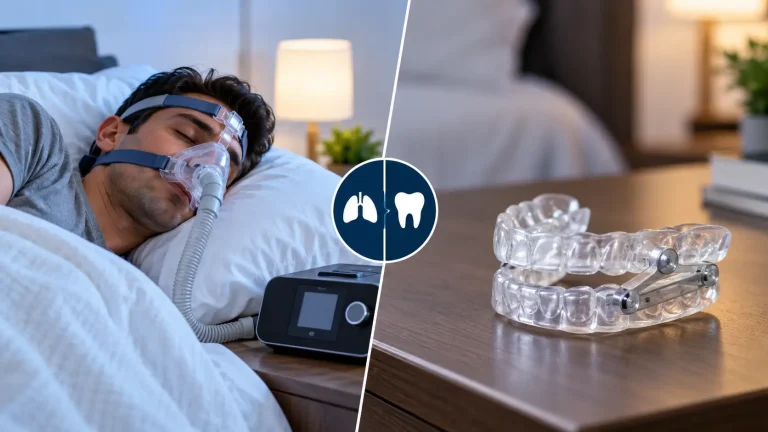
How Does CPAP Work?
A CPAP machine delivers continuous positive airway pressure through a mask to help keep the airway open while you sleep. It is generally considered the preferred treatment for many people with moderate to severe obstructive sleep apnea because it can significantly reduce breathing events.
CPAP does require a machine, tubing, mask, power, and regular cleaning. Some users may experience mask leaks, dryness, congestion, or discomfort while adjusting to therapy.
What Is an Oral Appliance?
An oral appliance is a small dental device worn during sleep. It works by positioning the lower jaw forward to help keep the airway open.
These devices can be particularly useful for people with mild to moderate obstructive sleep apnea or for patients who have difficulty tolerating CPAP. They are compact and do not require electricity, making them convenient for travel.
CPAP or Oral Appliance?
There is no single treatment that is right for everyone. CPAP generally provides a greater reduction in apnea events, while an oral appliance may be easier for some people to wear consistently.
Your sleep study results, apnea severity, comfort preferences, anatomy, and ability to use the treatment consistently should all be considered.
Before choosing a treatment, discuss your options with a qualified sleep professional. For more information, read the full CPAP vs. Oral Appliance guide from cpapRX.


Comments
Post a Comment