ResMed AirFit Masks Compared: Full Model Breakdown
ResMed AirFit masks compared shows silicone cushions across full face, nasal, and pillow styles. AirFit P10, N20, F20, N30i, F30i, and X30i each target different breathing routes, sleep positions, and pressure needs. Pick based on mouth versus nose breathing, side-sleeping habits, and desired facial contact.
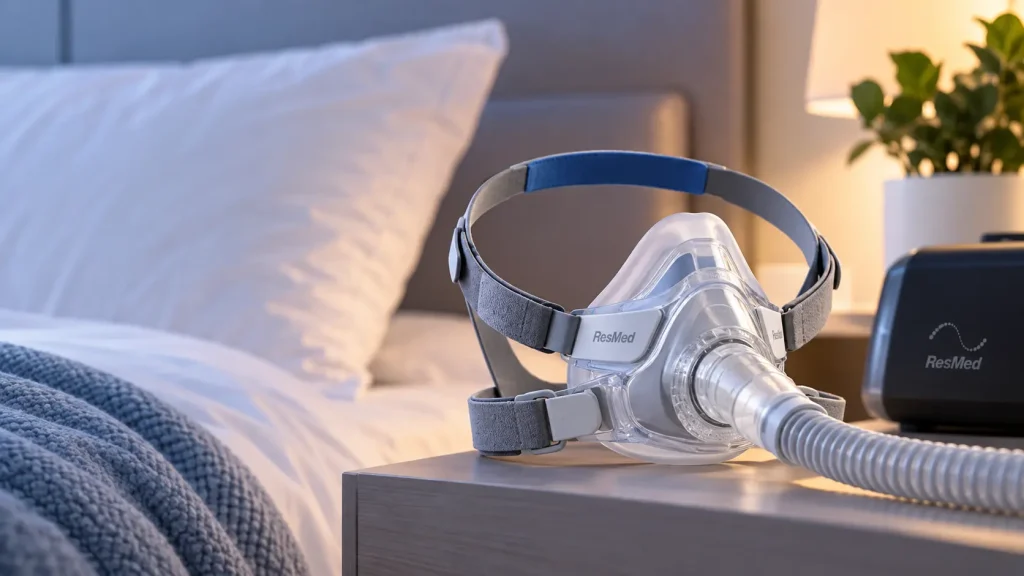
If
you are choosing between two ResMed mask lines, confused by overlapping names,
or dealing with skin irritation, this guide breaks down the AirFit lineup in
plain language. You will see how each model fits different needs, which ones
work best for side sleepers, and where memory foam (AirTouch) might be a better
option for sensitive skin.
ResMed
AirFit lineup 2026: matching your breathing, sleep position, and comfort
Mouth
breather — unsure if nasal-only mask will work
If
you breathe mostly through your mouth, a full face AirFit mask is usually the
most effective choice because it seals both airways. The AirFit F20, F30, F30i,
F40, or X30i are all strong options, with varying levels of facial contact and
hose routing. Nasal-only masks can work for mild mouth leak with a chin strap,
but they often struggle when congestion is heavy or the jaw drops
significantly.
Side
sleeper — wants minimal hose drag and stable seal
For
side sleepers, masks with top-of-head hose connections reduce drag and leaks
when turning. The AirFit F30i, N30i, and P30i are designed with overhead
tubing, making them excellent for active and side sleepers. The AirFit F40 and
N20 are also side-sleeper friendly, with low-profile cushions that catch less
on the pillow.
Skin
irritation with silicone — wondering if memory foam (AirTouch) helps
If
you experience skin irritation with silicone cushions, the AirTouch line
(memory foam or fabric) may be more comfortable. AirTouch F20 and N20 use UltraSoft
memory foam that conforms gently to facial contours, reducing pressure marks
and redness. The AirTouch N30i uses a ComfiSoft fabric cushion that combines
softness with breathability. Many users with sensitive skin report better
adaptation with AirTouch cushions, though they require wipe-only cleaning and
more frequent replacement.
Confused
by overlapping model names
ResMed
naming can be confusing, but the pattern is straightforward: F = full face, N =
nasal, P = nasal pillow, X = oral-nasal hybrid. Numbers indicate generation and
design (20 = traditional, 30 = minimal contact under nose, 40 = side-sleeper
optimized). The "i" suffix means top-of-head hose routing (e.g.,
F30i, N30i, P30i). Understanding this structure helps you quickly identify
which models match your breathing style and sleep position.cpapequip.co+1
AirFit
mask comparison: models, coverage, and best-use cases
Full
face models: F20, F30, F30i, F40, X30i
Full
face AirFit masks cover both nose and mouth, making them the top choice for mouth
breathers and users with frequent congestion. The AirFit F20 is the classic
full face design with a traditional frame and InfinitySeal silicone cushion
that provides a secure, durable seal. It suits back sleepers and users who want
a proven, stable fit at moderate to high pressures.
The
AirFit F30 and F30i are minimal-contact full face masks with cushions that sit
under the nose, leaving the bridge free for glasses and reading. The F30 has a
front hose connection, while the F30i routes the tube over the top of the head,
which reduces hose drag for active and side sleepers. Both use InfinitySeal
silicone cushions that balance coverage with a lighter feel than the F20.
The
AirFit F40 is a newer full face option designed with side sleepers in mind,
offering low facial contact and a stable seal even when turning. It is ideal
for mouth breathers who want full coverage without the bulk of traditional full
face masks. The AirFit X30i is an oral-nasal hybrid that covers the mouth and
sits under the nose, combining full face therapy with minimal upper-face
contact. It works well for users who need mouth coverage but dislike
nose-bridge pressure.
Nasal
models: N20, N30, N30i
Nasal
AirFit masks cover only the nose, leaving the mouth free for a less confined
feel. The AirFit N20 is a popular nasal mask with an InfinitySeal silicone
cushion that conforms to the nose for a stable seal. It is a strong choice for
side sleepers who want more coverage than pillows but less bulk than full face
masks.
The
AirFit N30 and N30i are under‑nose nasal masks with cushions that sit below the
nostrils, keeping the bridge clear. The N30 has a front hose connection, while
the N30i routes the tube over the top of the head for minimal drag. These
designs suit active sleepers, glasses wearers, and users who want a light, open
feel with reliable nasal therapy.
Nasal
pillow models: P10, P30i
Nasal
pillow AirFit masks use small silicone inserts at the nostril entrance for
minimal facial contact. The AirFit P10 is one of the lightest CPAP masks available,
with a compact frame and front hose connection. It is ideal for stomach
sleepers, travelers, and users who feel claustrophobic in larger masks.
The
AirFit P30i is a nasal pillow mask with top-of-head hose routing, which
eliminates hose drag across the face and pillow. It is an excellent option for
side sleepers who want the lightest possible contact with a stable seal. Both
P10 and P30i work best for consistent nose breathers who prioritize freedom of
movement and open vision.
Best
AirFit mask for me: quick picks by need
● Best for mouth breathers: AirFit F20, F30, F30i, F40, or X30i
(full face coverage with stable silicone seal).
● Best for side sleepers: AirFit F30i, N30i, P30i (top hose
routing), or F40/N20 (low-profile cushions).
● Best for minimal contact: AirFit P10, P30i (nasal pillows),
or N30/N30i (under‑nose nasal).
● Best for sensitive skin: Consider AirTouch line (memory
foam/fabric) instead of AirFit silicone cushions.
● Best for high pressures: AirFit F20, F30, F30i (InfinitySeal
silicone cushions designed for stable seals at elevated therapy levels).
Explore
Our Range
If
you are comparing ResMed AirFit masks, cpapRX offers a curated selection of
AirFit models, plus AirTouch alternatives for users with sensitive skin or
specific comfort needs.
● Browse ResMed CPAP masks to compare AirFit and AirTouch styles:
● Learn more about CPAP therapy and equipment in our resources section:
● Explore CPAP services, including prescription support and home sleep testing:
Pairing
the right AirFit model with your breathing style, sleep position, and comfort
priorities can transform therapy success—without changing your machine.
FAQs
What's
the difference between AirFit and AirTouch masks?
AirFit
masks use silicone InfinitySeal cushions that are durable, fully washable, and
designed for long-term use. AirTouch masks use UltraSoft memory foam (F20, N20)
or ComfiSoft fabric (N30i) cushions that conform gently to facial contours for
plush comfort. AirFit cushions last up to 90 days with proper care, while
AirTouch memory foam cushions are typically replaced every 30 days and require
wipe-only cleaning.
Is
AirTouch (memory foam) more comfortable than AirFit (silicone)?
AirTouch
memory foam cushions are generally more comfortable for users with sensitive
skin or those who experience pressure marks from silicone. The foam adapts
quickly to facial contours, reducing redness and improving the feel for
claustrophobic users. However, some users prefer the firmer, consistent seal of
AirFit silicone cushions, especially at higher pressures or with oily skin.
Comfort is subjective, so testing both materials on the same frame often yields
the best answer.
Do
AirFit and AirTouch masks fit the same headgear?
Yes,
AirFit and AirTouch masks share the same frame and headgear within each model
type (e.g., F20, N20). This means you can often swap AirFit silicone cushions
with AirTouch memory foam cushions on the same frame without buying a complete
new mask. This cross-compatibility makes it easy to test both materials and
find the best seal and comfort level for your face.
Which
line is better for sensitive skin?
AirTouch
is better for sensitive skin because its memory foam and fabric cushions are
softer and designed to reduce pressure marks and redness. Users with skin
irritation from silicone often adapt better to AirTouch cushions, which conform
gently without firm contact. AirFit silicone cushions are more durable and
washable but can cause irritation for some users, especially with prolonged
wear or higher strap tension.
Are
AirTouch masks more expensive than AirFit?
AirTouch
cushions are typically replaced more frequently (about every 30 days) than AirFit
silicone cushions (up to 90 days), which can increase long-term costs. The
initial mask price is often similar, but the ongoing replacement schedule makes
AirTouch more expensive over time. AirFit cushions offer better long-term value
due to their durability and washability, though comfort preferences may justify
the extra cost for AirTouch users.
Can
I switch between AirFit and AirTouch cushions on the same mask?
Yes,
you can switch between AirFit and AirTouch cushions on the same mask frame
within the same model (F20, N20). ResMed designs these frames to be
cross-compatible, allowing you to test both silicone and memory foam cushions
without purchasing a new mask. This flexibility is ideal for finding the best
balance of comfort, seal, and cleaning routine for your needs.
Which
line lasts longer before needing replacement?
AirFit
silicone cushions last longer, typically up to 90 days with proper cleaning and
care. AirTouch memory foam cushions are designed for about 30 days of use
before replacement due to material wear and hygiene considerations. AirFit
cushions are also fully washable, which extends their usable life, while
AirTouch cushions require wipe-only cleaning to avoid damaging the foam.
Which
is better for side sleepers, AirFit or AirTouch?
Both
AirFit and AirTouch offer side-sleeper friendly models, but the best choice
depends on cushion material preference and hose routing. AirFit F30i, N30i,
P30i, and F40 are excellent for side sleepers due to top hose routing and
low-profile cushions. AirTouch F20 and N20 provide plush comfort for side
sleepers with sensitive skin, though they lack top hose routing. For minimal
drag, AirFit "i" models are often preferred, but AirTouch cushions
may improve comfort for skin-sensitive side sleepers.


Comments
Post a Comment