ResMed AirFit vs AirTouch: Silicone or Memory Foam?
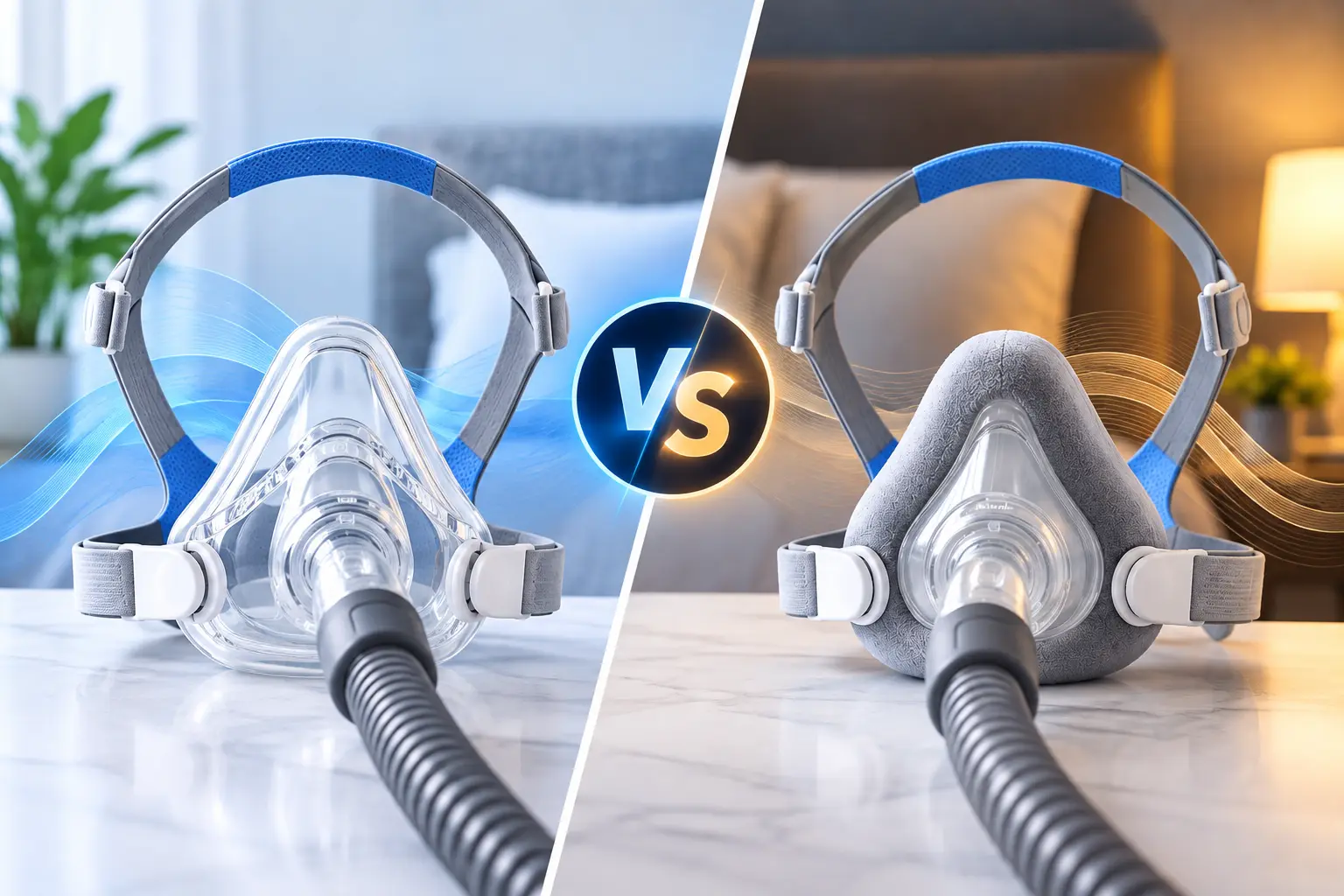
ResMedAirFit vs. AirTouch comes down to cushion material and feel. AirFit uses durable silicone; AirTouch uses memory foam or fabric for a softer, adaptive seal. Choose based on comfort, cleaning habits, and skin sensitivity.
If
you are new to CPAP, confused by mask categories, or worried about comfort at
high pressures, this guide breaks down the real differences. You will learn how
each line fits different breathing styles, sleep positions, and pressure
needs—so you can pick the right ResMed mask without guesswork.
ResMed mask lines compared: which style fits your needs?
Full face masks: AirFit F20 vs. AirTouch F20
Full
face masks cover both the nose and mouth, making them the top choice for mouth
breathers and users with frequent congestion. The AirTouch F20 features a
memory foam cushion that adapts to facial contours, reducing pressure points
and improving comfort for claustrophobic users. It seals effectively even at
high pressures, which is critical for users with moderate to severe apnea.
The
AirFit F20 uses a silicone InfinitySeal cushion that provides a durable,
consistent seal and is easy to clean. It is ideal for users who prefer thorough
washing, have oily skin, or want longer cushion life. Both masks share similar
frame designs and headgear, so switching between them is straightforward.
Nasal masks: AirFit N20 vs. AirTouch N20
Nasal
masks cover only the nose, leaving the mouth free for less claustrophobic feel.
The AirTouch N20 uses memory foam to gently conform to the bridge and sides of
the nose, which helps side sleepers and users with facial hair. It is a strong
option for those who struggle with silicone pressure marks or have sensitive
skin.
The
AirFit N20 features a silicone cushion with InfinitySeal technology for a
stable, long-lasting seal. It is fully washable and suits users who want a
firmer feel and lower replacement frequency. Both masks work well for
consistent nose breathers on moderate pressures.
Under‑nose and minimal‑contact options: AirTouch N30i and
AirFit P10
For
users who want minimal facial contact, the AirTouch N30i offers a
fabric-wrapped frame with a ComfiSoft cushion that combines fabric and
silicone. It sits under the nose, leaving the bridge free for glasses and
reading. The soft, breathable feel reduces pressure marks and suits active
sleepers.
The
AirFit P10 is a nasal pillow mask with silicone inserts that sit at the nostril
entrance. It is ultra-light, compact, and ideal for stomach sleepers or those
who feel confined by larger masks. While minimal-contact, it still delivers an
effective seal for many nose breathers.
AirFit vs. AirTouch comparison: cushion material, comfort,
and care
Cushion material and feel
The
core difference lies in the cushion. AirFit masks use silicone cushions that
are firm, smooth, and designed for long-term durability. AirTouch masks use
UltraSoft memory foam (on F20 and N20) or ComfiSoft fabric (on N30i) that
conforms to facial contours for a plush, gentle feel.
Silicone
cushions provide a consistent, reliable seal and are easy to wash with mild
soap and water. Memory foam cushions adapt quickly to irregular face shapes and
reduce pressure marks, which helps users who feel claustrophobic or have
sensitive skin. Fabric cushions, like on the AirTouch N30i, combine softness
with breathability while maintaining a stable under‑nose seal.
Cleaning and replacement
Cleaning
routines differ significantly. AirFit silicone cushions can be fully washed
daily, which many users prefer for hygiene and long-term value. AirTouch memory
foam cushions are wipe-only; washing them can damage the foam and reduce seal
quality. The AirTouch N30i fabric cushion is more forgiving and can be gently
washed, but still requires careful handling.
Replacement
schedules also vary. ResMed recommends replacing AirTouch memory foam cushions
about every 30 days due to material wear and hygiene. AirFit silicone cushions
typically last up to 90 days with proper care, making them more cost-effective
over time. If you prefer less frequent replacements and don't mind a firmer
feel, AirFit offers better long-term value.
Frame compatibility and flexibility
ResMed
designs AirFit and AirTouch frames to be largely cross-compatible within the
same mask style (full face, nasal, nasal pillow). This means you can often try
both cushion types on the same frame without buying a complete new mask. For
example, the AirTouch F20 frame works with AirFit F20 silicone cushions, and
vice versa.
This
flexibility is ideal if you are unsure which material suits your face. Start
with the cushion type that matches your comfort priority, then swap if needed.
Many users find that testing both materials on the same frame helps them
identify the best seal with minimal trial and error.
Best ResMed mask 2026: matching your breathing, pressure,
and sleep style
Mouth breather — unsure if nasal-only mask will work
If
you breathe mostly through your mouth, a full face mask is usually the most
effective choice because it seals both airways. The AirTouch F20 or AirFit F20
are top picks, with memory foam for plush comfort or silicone for durability.
Nasal-only masks can work for mild mouth leak with a chin strap, but they often
struggle when congestion is heavy or the jaw drops significantly.
Claustrophobic — worried full face mask will feel
restrictive
For
claustrophobia, start with minimal-contact designs like the AirTouch N30i or
AirFit P10. If you need full face coverage, the AirTouch F20's memory foam
cushion feels softer and less confining than traditional silicone. Many users
report better adaptation with memory foam because it molds quickly and reduces
pressure marks.
High pressure settings — needs to know which type handles
pressure best
Both
AirFit and AirTouch lines are engineered to seal effectively at high pressures.
The AirTouch F20 is specifically noted for maintaining a light, breathable seal
even at elevated therapy levels. Silicone cushions on AirFit masks provide a
firm, consistent seal that many high-pressure users trust for long-term
reliability.
Wants minimal-contact option but still effective seal
If
you prefer minimal contact, the AirTouch N30i fabric cushion or AirFit P10
nasal pillows are excellent choices. They offer a light feel with stable seals
for active sleepers and glasses wearers. For slightly more coverage without
full face bulk, the AirFit N20 or AirTouch N20 nasal masks provide a balance of
comfort and seal stability.
Explore Our Range
If
you are deciding between ResMed AirFit vs. AirTouch, cpapRX offers a curated
selection of both lines, including full face, nasal, and nasal pillow options,
plus replacement cushions and accessories.
● Browse ResMed CPAP masks to compare AirFit and AirTouch styles:
● Learn more about CPAP therapy and equipment in our resources section:
● Explore CPAP services, including prescription support and home sleep testing:
Pairing
the right cushion material with your breathing style and sleep habits can
transform comfort and therapy success—without changing your machine.
FAQs
What's the difference between full face, nasal, and nasal
pillow masks?
Full
face masks cover both the nose and mouth, making them ideal for mouth breathers
and users with congestion. Nasal masks cover only the nose, offering a lighter
feel for consistent nose breathers. Nasal pillow masks use small inserts at the
nostril entrance for minimal contact, suited for active sleepers and those who
feel claustrophobic in larger masks. Each style balances coverage, comfort, and
seal stability differently.
Which mask type is best for mouth breathers?
Full
face masks are best for mouth breathers because they seal both the nose and
mouth, ensuring therapy continues regardless of breathing route. The ResMed
AirTouch F20 and AirFit F20 are top choices, with memory foam for plush comfort
or silicone for durability. Nasal-only masks can work for mild mouth leak with
a chin strap, but they often struggle with heavy congestion or significant jaw
drop.
Which mask type is best for claustrophobia?
Minimal-contact
masks like nasal pillows (AirFit P10) or under‑nose designs (AirTouch N30i) are
best for claustrophobia because they cover less facial area. If full face
coverage is needed, the AirTouch F20's memory foam cushion feels softer and
less confining than traditional silicone. Many users with claustrophobia adapt
better to memory foam due to its plush, conforming feel and reduced pressure
marks.
Do nasal pillow masks work at high pressure settings?
Nasal
pillow masks can work at high pressure settings for many users, but success
depends on individual fit and pressure tolerance. The AirFit P10 and similar
designs deliver effective seals with minimal contact, though some users may
experience nasal irritation at very high pressures. If high pressure causes
discomfort, switching to a nasal mask (AirFit N20 or AirTouch N20) or full face
mask (AirFit F20 or AirTouch F20) often improves comfort and seal stability.
Which type is best for side sleepers?
Nasal
masks and nasal pillow masks are best for side sleepers because they have a low
profile that catches less on the pillow. The AirTouch N20 and AirFit N20 nasal
masks offer stable seals with minimal bulk, while the AirFit P10 nasal pillows
provide ultra-light contact. Full face masks can work for side sleepers if the
cushion is soft and the headgear allows movement, but they may feel bulkier on
the pillow.
Which mask type is easiest for beginners?
Nasal
masks are often easiest for beginners because they balance coverage and
simplicity without the bulk of full face designs. The AirFit N20 and AirTouch
N20 are popular starting points, offering stable seals and straightforward
cleaning. Full face masks like the AirTouch F20 are also beginner-friendly for
mouth breathers, while nasal pillows suit users who prioritize minimal contact
and quick adaptation.
Can I switch mask types without a new prescription?
You
can often switch mask types without a new prescription because CPAP
prescriptions typically specify pressure settings, not exact mask models.
However, insurance coverage for new masks may require documentation of medical
necessity or a trial period. Check with your provider and supplier to confirm
coverage rules, and use cross-compatible frames to test different cushion
materials before committing to a full replacement.
Which type has the fewest leaks overall?
Full
face masks generally have the fewest leaks for mouth breathers because they
seal both airways, reducing mouth leak risk. Among ResMed lines, the AirTouch
F20 and AirFit F20 are engineered for stable seals across a wide pressure
range. Nasal masks and pillows can achieve low leak rates for consistent nose
breathers with proper fit, but they are more susceptible to mouth leak if the
jaw drops during sleep.
Resources & Further Reading
● ResMed: Masks — overview of AirFit and AirTouch
mask lines and cushion technologies.
● ResMed: CPAP Masks | Find the Best Fit for You — patient guide to choosing between silicone and memory foam cushions.
● ResMed: Full Face Masks — details on AirTouch F20 and AirFit F20 full face options.
● ResMed US Blog:
AirTouch vs AirFit — cost and compliance analysis of memory foam versus
silicone cushions.


Comments
Post a Comment